INS.04 · Construction Productivity8 min read
The Subcontractor Economy: Redesigning Delivery for a Networked Construction Market
Subcontracting is no longer a sourcing choice at the edge of the project - it is the production system through which much of European construction is delivered. The leadership question is whether the project management system can see, assure and coordinate the organisations on which the schedule actually depends.
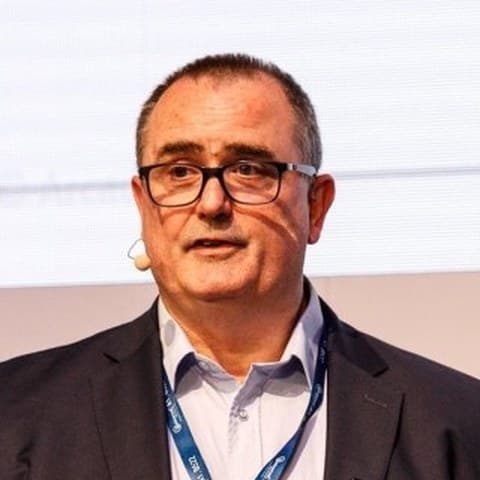
Richard Casey
Chief Executive Officer & Program Development Manager, Primesel Group

Key takeaways
- 01Subcontracting is no longer a sourcing choice at the edge of the project. It is the production system through which much of European construction is delivered - and it changes where project risk sits.
- 02Contract coverage is not the same as delivery capacity. The signature risk is no longer simply contractor failure; it is the accumulation of weak signals across a network that no single organisation can fully see.
- 03Successful projects require five shifts: from buying packages to designing a delivery network; from prequalification to continuing capability assurance; from tier-one reporting to controlled lower-tier visibility; from retrospective measurement to leading production indicators; and from contractual risk transfer to joint constraint removal.
- 04The most important capability is not a new software tool. It is leadership - the ability to align independent businesses around one production outcome while maintaining commercial discipline.
Europe’s construction industry has gradually exchanged vertically integrated delivery for a distributed production model. Main contractors increasingly coordinate portfolios of specialist subcontractors, suppliers, labour providers and commissioning organisations. The model is economically rational: it gives projects access to scarce expertise, absorbs fluctuations in demand and allows smaller firms to participate in large programmes. But it also changes where project risk sits.
In a highly subcontracted model, the project can appear fully contracted while remaining operationally under-resourced. Contract coverage is not the same as delivery capacity. The signature risk is therefore no longer simply contractor failure; it is the accumulation of weak signals across a network that no single organisation can fully see.
The leadership question is direct: can the project management system see, assure and coordinate the organisations on which the schedule actually depends?
Europe Has Built a Subcontractor-Dependent Production System
The available data do not produce a single, current percentage for the share of European projects delivered by subcontractors. They do, however, reveal an industry whose structure makes subcontracting unavoidable. Eurostat reports approximately four million EU construction enterprises in 2023; 94.2% were micro-enterprises employing fewer than ten people. The sector employed 13.9 million people and generated approximately €2.3 trillion in net turnover. Complex assets cannot be delivered by this fragmented base without extensive coordination between firms.
Six forces reinforce the model. Technical specialisation in building services, controls, cleanrooms, process systems and high-voltage infrastructure demands certified competence. Main contractors have become leaner, holding management and coordination capability rather than permanent trade capacity. Labour scarcity drives reliance on specialist and cross-border providers. Demand volatility makes subcontractors an economic buffer. Risk allocation distributes scope through increasingly granular packages. And technology and industrialisation shift work toward specialist suppliers whose capability sits outside the project organisation.
Cross-border labour provides a visible proxy. The European Labour Authority estimated that approximately 833,000 posted-worker documents were issued for construction services in 2021 - around one in four such documents issued in the EU - with Germany the principal receiving country and Poland the principal sending country. National delivery systems draw heavily on capacity located elsewhere.
“The project schedule should be treated as a claim on subcontractor capacity. Every critical activity consumes named organisational capability at a particular time and place.”
| Structural indicator | EU construction, 2023 | What it signals |
|---|---|---|
| Enterprises | ~4.0 million | A very broad and fragmented production base |
| Micro-enterprise share | 94.2% | Specialist capacity is distributed across small firms |
| Employment | 13.9 million | A large workforce organised through many employers |
| Net turnover | ~€2.3 trillion | Subcontractor performance has economy-wide consequences |
Source: Eurostat, EU construction structural business statistics, 2023
The Risk Profile Changes When Delivery Becomes a Network
Traditional project controls assume that responsibility can be allocated through contracts and then monitored at package level. A networked project behaves differently. Performance emerges from the interaction of many firms, and risk often develops in the spaces between contracts.
Three failure modes recur. The capacity illusion: a package is awarded, but the subcontractor has not secured the people, supervisors or lower-tier capacity required - award status is measured, executable capacity is not. Hidden concentration: several packages depend on the same specialist, agency or scarce competence, invisible in package-level reporting. And interface drift: work falls between contractual boundaries, surfacing only when it reaches the critical path.
Five Changes to the Construction Operating Model
Design the delivery network before tendering it. Map the capabilities, interfaces and dependencies required to deliver the asset before packages are released. Identify critical specialists, likely lower tiers, geographic constraints, shared resources and single points of failure - and test packaging strategy against market capacity, not just contractual boundaries.
Replace one-time prequalification with capability assurance. Prequalification verifies historic credentials; it does not prove an organisation can execute a particular scope at a particular time. Capability assurance should continue from selection through mobilisation and delivery, assessing leadership, supervision, workforce, supply chain, design readiness, production systems, quality, commissioning and financial resilience.
Establish controlled visibility below tier one. Critical lower-tier dependencies - the agency supplying the supervisors, the OEM holding the long-lead component - must be visible enough to manage, without attempting to contractually control the entire chain.
Manage production through leading indicators. Lagging measures show that performance has already changed. Networked delivery requires signals that predict whether work can flow: constraint clearance, approved design, material availability, competent labour, workface readiness, crew loading, first-time quality and interface closure.
Create a supplier-improvement system. Do not wait for formal underperformance to intervene. Diagnose capability gaps, agree short-cycle actions, provide coaching and bring specialist resources into the problem. The objective is not to shield poor performers; it is to protect project outcomes where replacement is slow, expensive or impossible.
The Skills Portfolio Must Expand
Project organisations remain strong in contract administration, planning and technical assurance. The next productivity frontier requires skills that operate across organisational boundaries: delivery-network design, lower-tier visibility, production-system management, cross-border workforce coordination and supplier-improvement coaching.
The most important capability, however, is not a new software tool. It is leadership - the ability to align independent businesses around one production outcome. Package managers need to influence organisations they do not control, surface weak signals without creating defensive behaviour, make trade-offs across the system and maintain commercial discipline while enabling collaboration.
A Practical Transformation Agenda
The transition does not require a single large systems implementation. In the first 90 days: define the dependency taxonomy, select critical packages, map tier-one and critical lower-tier relationships, agree leading indicators, and appoint accountable package and interface owners. The executive evidence of progress is simple - one dependency map, one critical-supplier watchlist, one common readiness review.
Within twelve months and beyond: develop shared industry data standards, portable capability credentials and portfolio-level capacity intelligence. The returns are reduced duplication, stronger market visibility, and better investment and packaging decisions.
Measure outcomes, not administrative activity. The success of a subcontractor-management transformation is not the number of assessments completed or dashboards created. It is productive time, plan reliability, first-time quality, mobilisation performance, interface closure, forecast accuracy and the number of critical risks resolved before they affect the site.
The Prize Is Project Certainty
Subcontracting remains essential to Europe’s construction competitiveness. Restricting it would not recreate the integrated contractors of the past; it would reduce access to specialist capability and constrain the participation of SMEs. The more productive response is to build management systems suited to the operating model the industry already has.
That requires a shift in mindset. Subcontractors are not simply external vendors delivering isolated scopes. Collectively, they are the project’s production system. Their capacity, interfaces, data and improvement capability must be managed with the same discipline previously reserved for an organisation’s own workforce and factories.
Europe does not have a subcontracting problem. It has a subcontractor-dependency visibility and integration challenge. The organisations that solve it will convert fragmented capability into predictable project delivery.
Written by
Richard Casey
Chief Executive Officer & Program Development Manager
A chief executive and programme leader in the global semiconductor industry, with extensive experience driving strategic initiatives across multiple regions. Richard brings a strong foundation in lean methodologies, is actively engaged with Lean Construction Ireland, and is recognised for building and leading high-performing delivery teams that carry complex programmes from strategy to execution.